
For a truly unique Oklahoma experience, plan a trip to the Salt Plains National Wildlife Refuge to go selenite crystal digging at the Salt Plains in Oklahoma.
My family and I had an amazing time at the park! We were super excited to start crystal-hunting and, after a bit of trial and error, we found some beautiful ones to keep as special mementos.
We also had the chance to relax and enjoy the peaceful surroundings by doing a bit of birdwatching. It was so cool spotting different bird species. And, of course, we couldn’t pass up the opportunity for a hike. Our day at the park was one for the books, and we’re already counting down the days until we can do it all over again!

Crystal Digging at the Salt Plains in Oklahoma
Crystal digging at the Salt Plains in Oklahoma is a popular activity for people of all ages. The 11,200-acre salt flats are known for its unique hourglass-shaped selenite crystals, also known as “hourglass selenite” or “salt crystals.”
Where are the Salt Plains in Oklahoma?
The Salt Plains in Oklahoma are located within the Salt Plains National Wildlife Refuge, which encompasses the salt flats. The area designated for crystal digging is located in the southwest portion of the refuge.

The nearest town to the Salt Plains is Jet, about an 11-mile drive away. The Salt Plains are about 2.5 hours northwest of Oklahoma City.
Pro tip: Don’t confuse Salt Plains State Park with the Salt Plains National Wildlife Refuge. The state park is NOT where you dig for crystals.

What caused the Great Salt Plains in Oklahoma?

The Great Salt Plains in Oklahoma were formed as a result of a series of geological events that occurred millions of years ago. During the Permian period, a shallow sea covered much of what is now Oklahoma, including the area that would become the Great Salt Plains.
As the ocean receded permanently, a thick layer of salt was left behind. The surface is still replenished annually by underground saline-rich water during floods.
Over time, the recrystallization process causes the salt to expand and contract, forming the distinctive hexagonal shapes that are visible on the surface of the Great Salt Plains today. The salt also attracts a variety of unique plant and animal life, which have adapted to the harsh, saline conditions of the area.
What are the Selenite Crystals?
Selenite, which is also known as hydrous calcium sulfate, is formed naturally from minerals found just below the salt-covered surface. These crystals have a chocolate-brown color due to the presence of iron oxide in the soil.

The crystals are made of gypsum, which has many uses. In this form, the gypsum is crystallized. The brownish, hourglass shape inside the crystal is not found anywhere else.
How much does it cost to dig for crystals at Great Salt Plains?
There is no charge to dig for crystals. Each person is allowed to collect up to 10 pounds of crystals and one large cluster per day. While the crystals are free to dig and keep, you are not allowed to sell them.
When can you dig for crystals in Oklahoma?
The digging season lasts from April 1st through October 15th. Hours are from sunrise to sunset. This closure is to protect the endangered Whooping Cranes migrating through the area.

How do you dig for salt crystals in Oklahoma?
The sandy moist soil can actually be fairly easy to dig in. The best crystals are found in the clay deposits and can be found by breaking apart the clay or washing it to reveal the crystals.
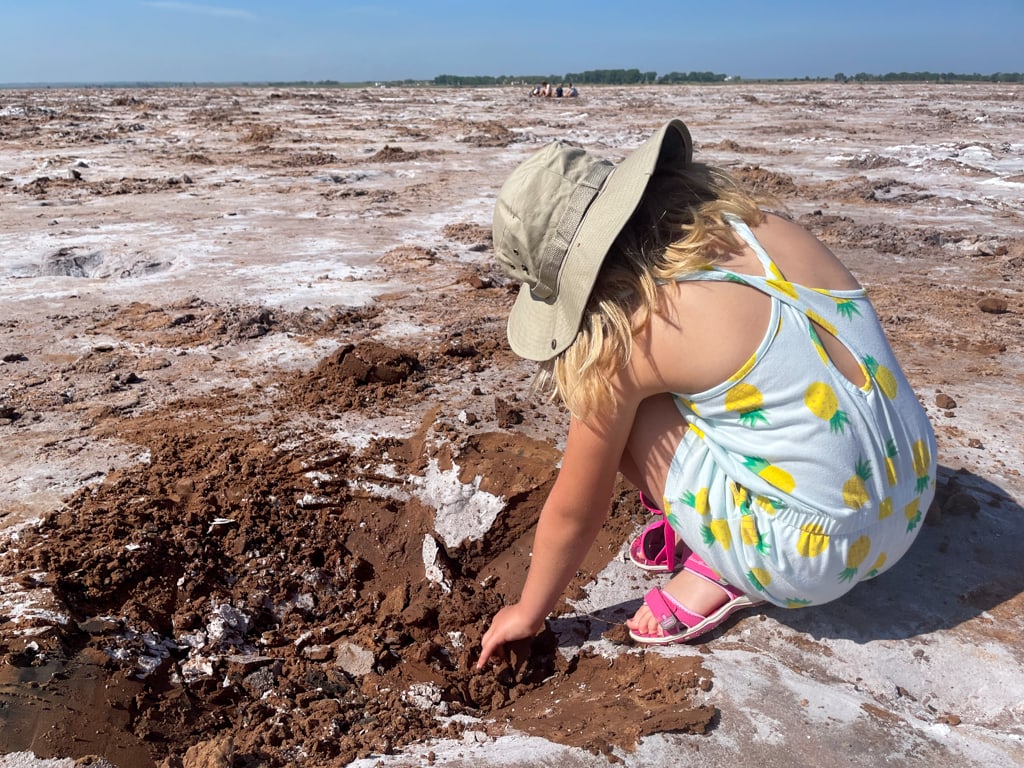
We found that it was best to move around until you could feel the crystals when you push a shovel into the soil. You don’t want to dig too deep unless you are trying to get water for washing the clay. While bigger crystals can be found a little deeper, we found the most within a foot of the surface.


Tips for Digging and Storing Crystals
- Dig a hole using your shovel no more than 2 feet deep.
- Once you have some water, wash the side of the hole to reveal the crystals in the clay layers. You can also remove the clay and sift through it by hand or wash the clay away in a colander.
- Collect the crystals you find by hand. They are delicate and can break easily.
- Set the cleaned crystals out to dry on a towel or wash them when you get home. An egg carton makes for a great storage container for transport.
- There is no need to fill in the holes when you finish digging. The local wildlife uses them.
What to Bring to Dig for Crystals
There are several things to bring for digging crystals to make it easier.
- Do yourself a favor and bring a real shovel. You can get away with a small shovel but it is worth it to bring a full-sized shovel. We moved around a few times to find a good spot with more crystals.
- Bring something for shade and apply generous amounts of sunscreen. We didn’t intend to stay as long as we did but we were having fun and lost track of time. As you might suspect, we got a little red after almost 3 hours of digging. We saw some people with full awnings and some with simple beach umbrellas.
- Hats, sunglasses, and extra sunscreen are a must out on the salt plains. Wide-brim hats are preferable but a baseball cap could work too. The white salt reflects the sun much like snow and you will appreciate the sunglasses as you dig.
- You will want something to carry all your stuff to your dig site. We brought a cart but realized it would be difficult to maneuver with the massive number of holes already dug. We also brought a five-gallon bucket. That served well to carry our smaller tools, sifter, wash water, cups, and egg carton from hole to hole.
- Another thing to keep in mind is that you will want plenty of water. Depending on how long you dig and how hot it is, you may need several gallons of water for your group. It is best to plan accordingly because there is not anywhere convenient to get drinking water nearby.
- Snacks and other food is also a must.
- Plan ahead on how you are going to clean up after being out on the salt plains and getting dirty. Wear clothes there that you don’t care to get dirty. You will want to also bring a change of clothes and probably a different pair of shoes. If you bring towels to sit on, you may be able to make it back to the bathroom near the entrance to change. Trash bags for dirty clothes and tools is not a bad idea either.
- A first aid kit would be good to have along. The ground is uneven and the crystals can be sharp. It is always best to be prepared.
Supply List
- Hats, sunglasses, and sunscreen
- Large umbrellas or pop-up awnings for shade
- A good, sturdy shovel
- Cups, colanders, and water to clean the crystals
- A bucket or cart to transport tools and other items
- Egg carton or plastic container to store crystals
- Snacks and plenty of water to drink
- Something to sit on
- First aid kit
- Extra clothes, shoes, wipes, and trash bags for dirty items
Tips for Crystal Digging at the Salt Plains in Oklahoma
- Wash your car and your tools used after leaving. The salt can be corrosive to shovels and the car’s undercarriage.
- Pets are allowed, however, they must be kept on a leash
- You cannot fly a drone. The salt plains are part of a National Wildlife Refuge and drone operations are strictly prohibited even with a license.
- To protect wildlife, digging outside the crystal digging season or the designated area is prohibited. The assigned area is clearly marked as well as the off-limits areas.
Other Things to Do in the Salt Plains
There is more to do than just crystal digging at Oklahoma’s Salt Plains.
Hiking
There are multiple hiking trails available within the Salt Plains National Wildlife Refuge and Salt Plains State Park.

The Sandpiper Trail, located north of the crystal digging area, is a 0.54-mile out-and-back paved trail that is a great place for birdwatching.

The Jet Recreation Nature Trail is located on the southeast side of Great Salt Plains Lake. This 1.85-mile out-and-back trail takes you along the lake for scenic views.
Salt Plains National Wildlife Refuge Headquarters
At the Salt Plains National Wildlife Refuge Headquarters, you can pop into the visitor center, go on a hike, or take a scenic drive.

There are two trails to explore in this area. The Eagle Roost Trail is a 1.34-mile loop. We actually saw an eagle along with other bird species along this trail. The shorter Hoot Owl Loop is only 0.68 miles.

If hiking isn’t your thing, there is also a 2.5-mile auto tour through the wetlands that allows you to birdwatch from your car.
Fill Your Cup at deVine Artesian Well

deVine, a local water bottling company, is located nearby. Stop at the well along Highway 11 and fill up your cup with refreshing cold water. It is a gift from the company to the local people.
Salt Plains State Park
Salt Plains State Park, located on the east side of Great Salt Plains Lake, is worth checking out if you want to swim, do some hiking, or stay near the crystal digging area.

The park is split into 3 areas: Sandy Beach Area, River Road Campground, and South Spillway Area. The swim beach is clean and easy to get to. The River Road Campground area has playground equipment and the Tonkawa Nature Trail.

The South Spillway area is the park headquarters. This is where most of the amenities are located including more hiking trails and fishing docks. The park also provides boat access to Great Salt Plains Lake.
If you are looking to stay in the park, there are 6 cabins, RV sites, and tent sites. If you are not staying in the park, there is a $10 parking fee.
Final Thoughts on Crystal Digging at the Salt Plains in Oklahoma
Digging for crystals at the Oklahoma Salt Plains is a memorable experience. Whether you are making it a day trip or exploring more unique sights in Northwest Oklahoma, you are sure to have a great time. Pack up the right gear, go prepared to get dirty, and have fun digging.
Looking for more Oklahoma outdoor adventures?


